The Demoscene
European crackers who started signing their work and accidentally invented a digital-art tradition that is still running.
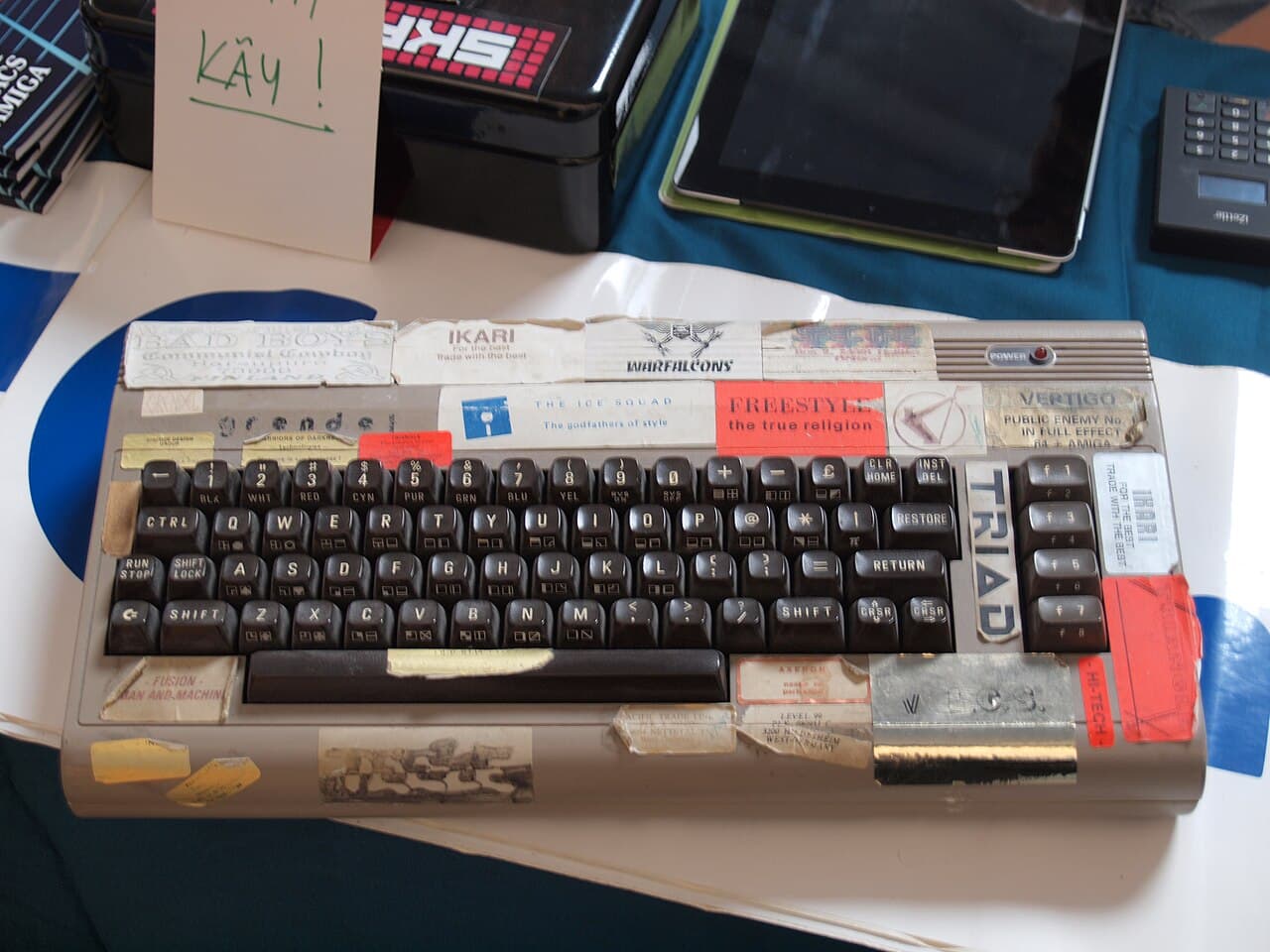
The object
The demoscene is a continuous European subculture, born on the Commodore 64 around 1982, in which programmers, artists, and musicians compete to push small computers past what their manufacturers thought possible. The artifact is not any single demo but the practice itself: real-time audiovisual programs, often constrained to absurd file sizes, performed in front of a live audience at "demoparties." A demo is rendered live by the machine, not played back like a video. Its boast is that the computer is doing all of this, right now, in front of you. In 2021 Germany became the first country to add the demoscene to its national inventory of intangible cultural heritage, with Finland and several other states following.
From cracking to art
It began as graffiti. Software pirates added short "crack intros" to the games they distributed: a name, a greeting, a scrolling message thanking rival groups. The intro grew longer than the crime. By the late 1980s, crews like Finland's Future Crew, Sweden's The Black Lotus, and Fairlight were releasing standalone demos with no pirated payload at all, competing at events such as Assembly (Finland, since 1992), The Party (Denmark, 1991–2002), and later Revision (Germany). Future Crew's Second Reality, shown at Assembly 1993, is still cited as a landmark of what a PC could be made to do. The discipline of sizecoding hardened into formal categories (a 64-kilobyte "intro," or a 4-kilobyte program that renders a city, an orchestra, a coastline from almost nothing) and became a recognisable European art form, with its own competitions, its own trackers and music formats, and its own canon.
Why it matters
The demoscene is the longest unbroken thread of computer-as-instrument in this museum, running without interruption from the C64 to today's GPUs. Where American hacker culture mostly framed the machine as a tool of freedom, the European scene framed it as a tool of expression. Demoparties bred a generation of graphics programmers, game developers, and audio engineers; even now, a surprising number of senior figures at studios such as Remedy and DICE, and at engine and graphics teams across the industry, walked in through a demogroup. The skills the scene rewarded, squeezing maximum effect from minimal hardware, hand-tuning assembly, exploiting the quirks of a specific chip, are exactly the skills the games industry came to need.
It is also a culture that takes constraint seriously. A 64-kilobyte demo treats limits the way poets treat metre, not as obstruction but as form. The constraint is published in advance, the same for everyone, and enforced by the machine itself; the artistry lies entirely in what you can coax out within it.
The lesson it set loose
When you sign your work, you start making it for someone. The crack intro was meant to brag; it became, almost by accident, an offering. Once the audience existed, the art could grow without crime to ride on. The demoscene has been making things for that audience, in public, ever since, competing for nothing but applause and a place in the scrolltext of the next demo.
Further reading
Keep exploring
Next exhibit
WarGames