The Raspberry Pi
A thirty-five-dollar computer the size of a credit card, built to put tinkering back into the hands of children.
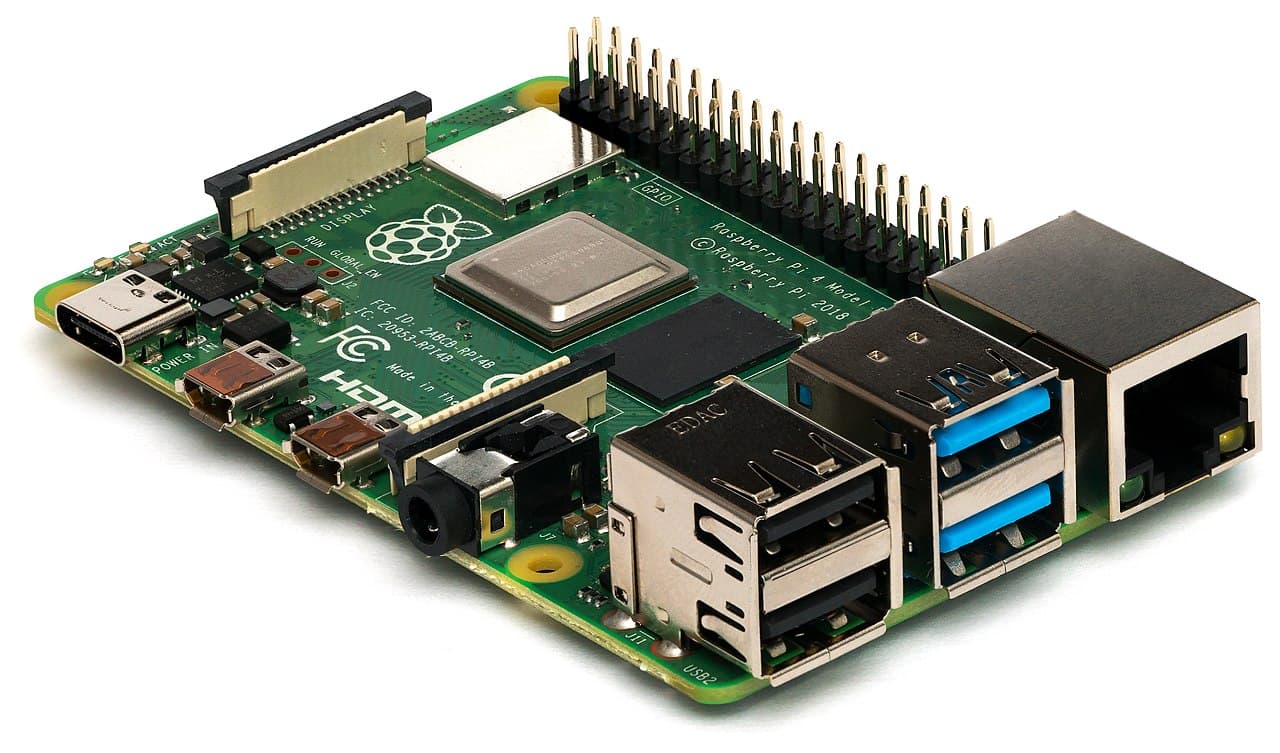
The object
The Raspberry Pi is a complete computer on a single board the size of a playing card, launched on February 29, 2012, by a charitable foundation in Cambridge, England. The first model cost about thirty-five dollars. It had no case, no hard drive, and exposed pins you could wire straight to motors and sensors. The launch-day demand was so heavy it knocked over the websites of its distributors.
Bringing back the bedroom programmer
Eben Upton and his collaborators built the Pi out of a worry: that the generation raised on sealed, polished devices had lost the chance their elders had: to open the machine and break it. Where the Altair and the BBC Micro had once invited tinkering, the modern computer discouraged it. The Pi was a deliberate throwback, cheap enough to risk destroying and open enough to demand experiment. It became the heart of a global maker movement, wired into weather stations, retro game consoles, robots, and school classrooms on every continent.
Why it matters
The Pi proved that the hacker ideal of the accessible machine still had work to do. Decades after the personal computer "won," it had also become a closed appliance; the Pi reopened it. It made physical computing, code that moves things in the real world, cheap enough for a curious twelve-year-old, reviving the exact spirit the Homebrew Computer Club had carried in the 1970s.
The lesson it set loose
Accessibility is never finished; it has to be won again for each generation. The Pi answered the Altair's old promise in a world that had forgotten it: that a computer should be something you can hold, open, understand, and bend to your will, and that the cheapest way to make a hacker is to hand a child a machine they are allowed to break.
Further reading
Keep exploring
From the same era
From the same place
Next exhibit
Signal